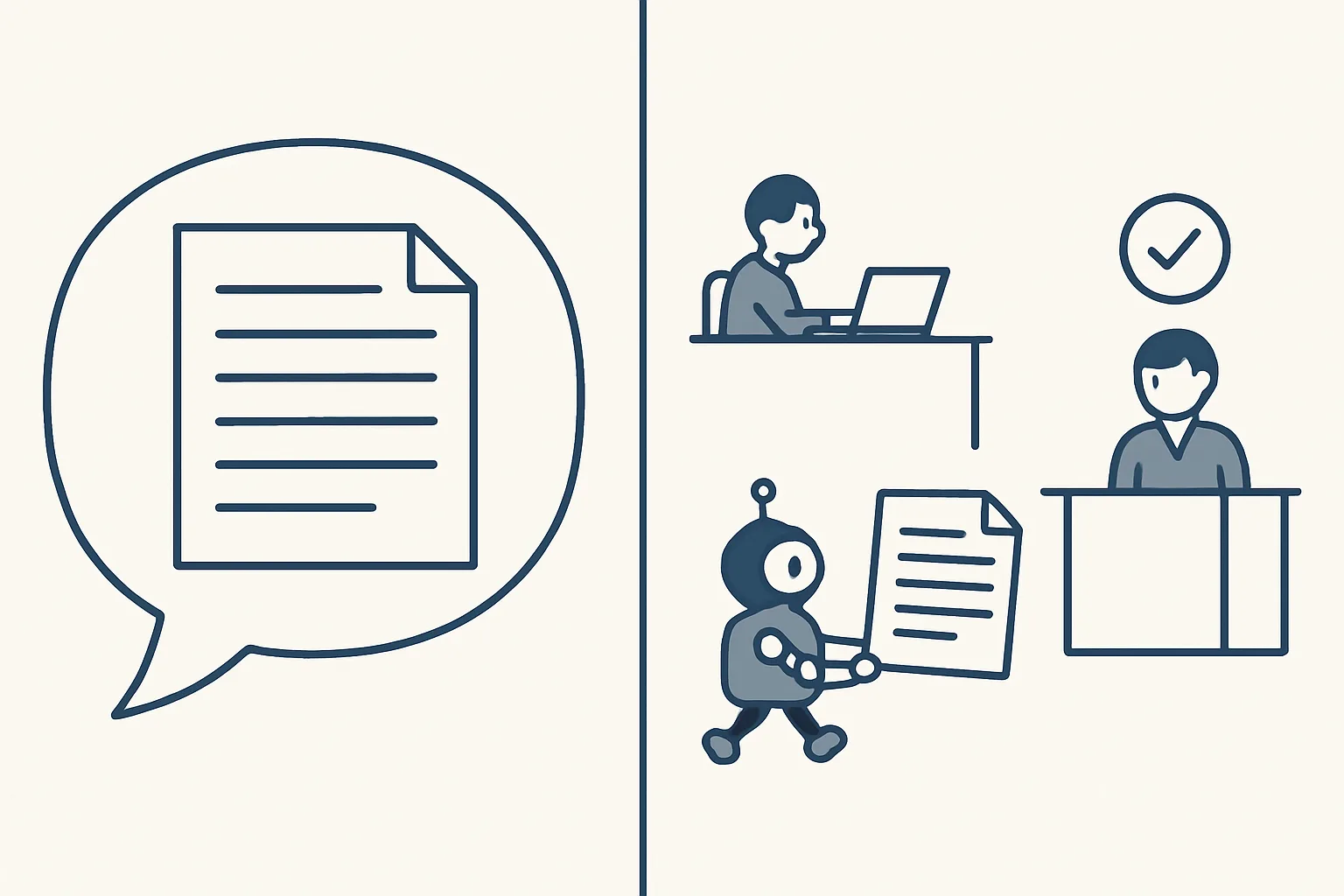
Agentic AI vs generative AI comes down to answering versus doing. Generative AI writes when you ask: a paragraph, a summary, an image. Agentic AI uses that skill to carry out a task across several steps and tools, like reading an invoice, checking it and preparing the accounting entry.
What is generative AI, in one line?
Generative AI is software that writes new content, like text, a summary, an image or a table, when you ask it to.
You type a request and it writes back. Ask for a polite reply to a late-delivery complaint and you get a paragraph. Ask for a summary of a long contract and you get a page of bullet points. The result can be very good, but it stays on the screen. You still have to copy it, check it, paste it in the right place and decide what happens next.
That's why agentic AI vs generative AI matters to a business owner. Many people now use generative AI assistants to draft emails, reword documents or explain a spreadsheet formula. Those save typing. They don't move work between systems, and they forget your business rules unless you paste them in.
What is agentic AI, in one line?
Agentic AI is software that uses a language model to carry out a task through several steps and tools, deciding the next step from what it finds.
If you're asking what is agentic AI in everyday terms, think of a job, not a question. An agent gets a goal, like entering a new supplier invoice, and access to the tools for it: the mailbox, a folder, the accounting software. It reads the email, opens the attachment, works out who the supplier is, checks the amounts and prepares the entry. Each step uses the result of the one before.
A working agentic AI definition has three parts. A goal that ends in a result, not a reply. Tools the software may use. And rules about what it may and may not do, including when to stop and hand over to a person.
"Agentic" just means able to act. A tool that can act can act wrongly, so the useful ones have narrow jobs and firm limits.
So weighing agentic AI vs generative AI means choosing between a helper that waits for questions and a worker that's given a job. Both belong in the same office.
How do they compare side by side?
The short version: one writes on request, the other uses that skill to finish a task.
They're not rivals. An agent nearly always has a writing model inside it, for reading a messy document or drafting a reply. The difference is what surrounds the model: what starts it, the tools, the rules and a record of what was done. The table puts them side by side.
| Question | Generative AI | Agentic AI |
|---|---|---|
| What starts it? | A person typing a request | Something happening, like an email arriving or a row marked ready |
| What does it produce? | Text, an image or a summary on screen | A finished piece of work: an entry, a filed document, a draft email |
| How many steps? | Usually one: request and reply | Several, each depending on the last |
| Which tools does it touch? | Usually none beyond its own window | The mailbox, folders, sheets or accounting software it was given |
| Main risk | A wrong answer someone copies | A wrong action in a real system |
| Who finishes the job? | The person who asked | A person who checks the draft |
What do business examples look like?
Generative AI helps a person write faster. Agentic AI takes a repeated job off the desk and hands back drafts.
The easiest way to see the line is to take one task both ways. A supplier invoice lands in the accounts mailbox of a small wholesaler. With a generative assistant, someone opens the email, uploads the invoice to a chat window, asks for the supplier, date and amounts, then types them into the accounting software. The person still does every step.
With an agent built for supplier bills, the email arriving starts the job. The robot reads the invoice, recognizes the supplier, prepares a draft bill in the accounting software with the PDF attached, files the PDF under the supplier and sends one notice. Our supplier bills robot works this way and runs today for a client.
Here are more pairs from ordinary office work.
- Sales invoices. Generative: you ask for invoice wording. Agentic: a row marked ready becomes a PDF, a draft invoice in the accounting software and a draft email beside it. Running today.
- Inbox overload. Generative: you ask for help wording replies one at a time. Agentic: each morning, the previous day's new and unanswered emails across several mailboxes are sorted by business with a short summary. Running today.
Does this task need an agent or an assistant?
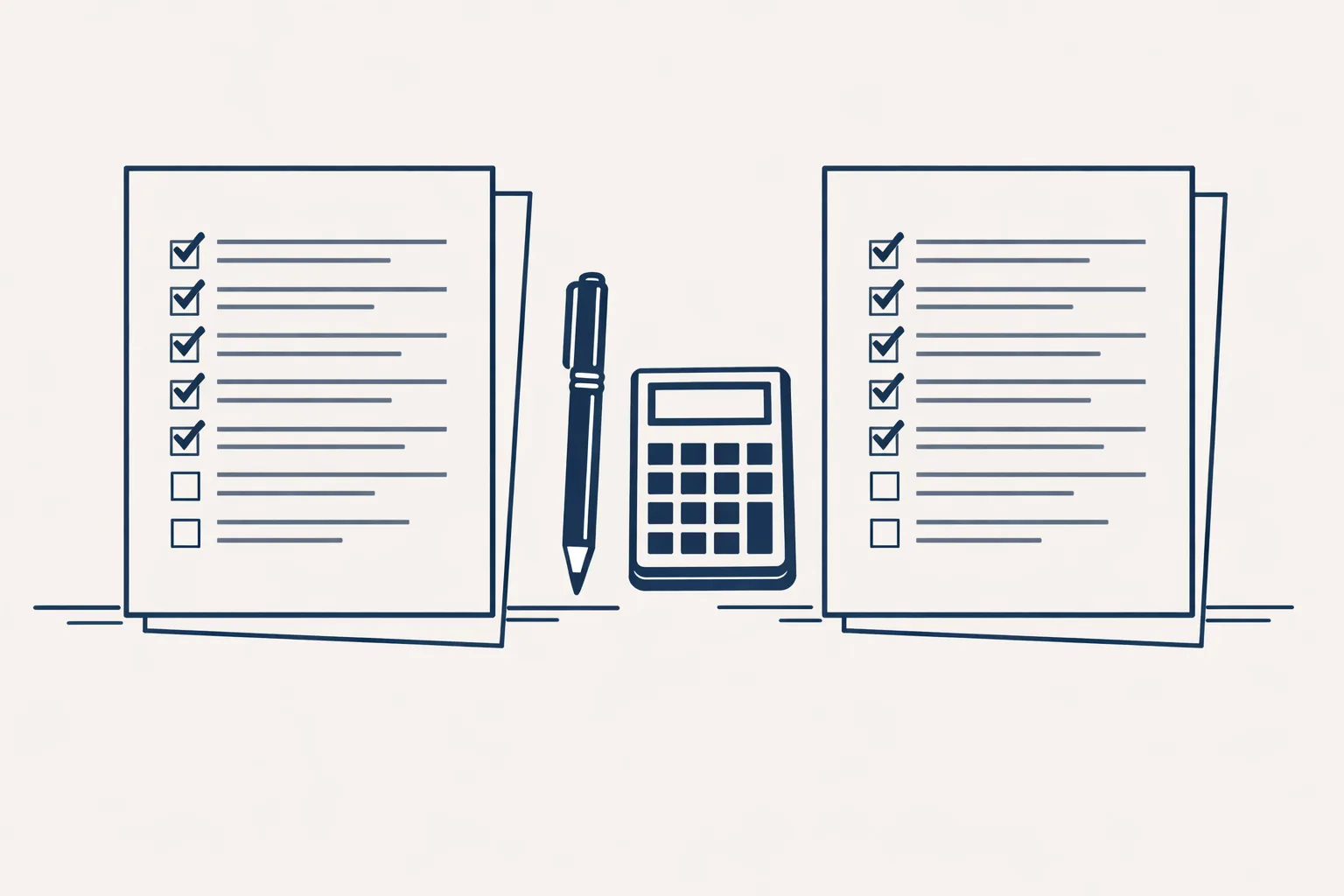
Pick one task from your week. Tick each line that is true of it. The more you tick, the more it looks like a job for an agent, not a chat assistant.
What are the risks of letting agents act?
The main risk is a confident wrong action in a real system, so the limits matter more than the model.
People ask how is agentic AI different from traditional automation. Classic automation follows fixed rules: if a field says this, do that. It breaks loudly when a document looks different, which is annoying but safe. An agent copes with variety, like a new invoice layout or an oddly worded email, because a model reads it. The same flexibility means it can misread something and carry on as if nothing were wrong.
So decide in advance what an agent may touch, what it must not do and who looks at its work while it earns trust.
Here are the risks worth naming before any agent touches your systems.
- Sending something that shouldn't leave the company: an email to the wrong person, a misread price.
- Moving money. A payment made in error is far harder to undo than a deleted draft.
- Guessing. A model that fills a gap with something plausible looks right until an accountant checks.
- Changing records quietly, so nobody can later tell what the software did and why.
Where do drafts and approvals fit?
Drafts and approvals make an agent safe to use: the software prepares the work in full, and the final word stays inside your company.
This is the rule our AI employees run under. Every step starts with your approval, and you choose later when it goes automatic. They're rented monthly, run on our servers and work in your own mailbox, folders, sheets and accounting software. Invoices, bills and orders arrive as finished drafts, the same way every time. When something's unclear, like an unknown supplier or a refund, it goes to a person instead of being guessed. Every action is logged, and one command stops any robot.
A well-run agent follows a route like this.
- Something happens in the business: an email arrives, a file lands in a folder, a row is marked ready.
- The agent reads what arrived and works out which job it belongs to.
- It follows the written rules for that job, using a model only where reading or wording needs it.
- It prepares a draft in the right place: an entry, a filed PDF, an email waiting in the mailbox.
- Anything it can't do exactly goes to a person with a short note.
- You check the draft and approve, edit or reject it.
- Every step is written to a log.
Which one should a small business start with?
Start from the job, not the technology.
Use generative assistants where you want help with words. Use an agent where a job repeats, follows rules and ends in a draft you can check faster than doing it by hand.
Say you run a small bakery. Writing a friendly note to regulars is a job for an assistant. Entering the flour supplier's invoice every week is a job for an agent.
Count the hours the job takes today, by your own rule, and start there.
Questions
What is agentic AI, in simple words?
Software that uses a language model to finish a task through several steps and tools, like reading an invoice and preparing the accounting entry, instead of only answering a question.
Is agentic AI the same as generative AI?
No. Generative AI writes content when asked. Agentic AI uses that skill inside a job with a starting event, tools and rules. Most agents contain a writing model, but not every writing tool is an agent.
How is agentic AI different from traditional automation?
Traditional automation follows fixed rules and stops when a document looks different. An agent can read variety, like a new invoice layout. That makes it more flexible, and it also needs firm limits and someone to check its output.
Can an AI agent send emails or make payments by itself?
It can be built to, but ours aren't. They work in your own mailbox and accounts, and payments stay with you.
Which should a small business start with?
Start from the job. If you want help with wording, a generative assistant is enough. If a task repeats, follows rules and ends in an entry or a filed document, an agent that drafts it is worth a look.
Tell us your workflow. We will build it around you.
Write to hello@thenewaiemployee.com with one repeated task and the hours it takes you each month. We'll tell you plainly if an agent fits it.
Talk to us Related service: Services