Many customers can tell AI generated video from real footage, especially with faces, hands and speech. Whether it matters depends on the job. For moods and simple tips it rarely does. For anything that must be believed, use real pictures and be honest.
Can customers tell it's AI generated video?
Often, yes, and the more a clip tries to look like real people, the more likely they'll notice.
Picture a hairdresser who posts a video of a smiling stylist talking to the camera, all made by AI. Viewers may sense something off: the smile is too even, the lips don't quite match the words. They can't always say why, but they feel it.
A calm clip of steam rising from a coffee cup is different. Nobody expects it to be a documentary. The same technology is easy to spot in one case and invisible in another.
So the real question isn't "will they notice?" It's "what happens when they do?"
Younger viewers tend to spot it fastest, since they watch so much video. Older viewers may not notice but can still feel that something is cold. Either way, the safest plan is not to count on being unnoticed.
What gives AI generated video away?
A few small flaws repeat across tools, and viewers learn to spot them.
Think of them like a badly forged signature. Each one on its own is easy to miss. Together they tell the story.
- Hands and fingers that bend or blur.
- Faces that are too smooth, or that change slightly from second to second.
- Lips that don't match the words.
- Text inside the picture that turns into nonsense.
- Objects that melt, appear or vanish.
- A voice that is flat or the same in every clip.
- Movement that feels floaty, as if nothing has weight.
Does it matter to your customers?
It matters when the clip asks them to believe something, and it hardly matters when it only sets a mood.
A pet shop posting a soft clip of puppies in sunlight is making an atmosphere. A dental office showing "real patient results" made by AI is making a claim. The first is harmless. The second can cost trust and may break advertising rules.
Customers care most about honesty on three things: people, results and products. If a video shows a person, a before-and-after or an item for sale, it should be real.
For tips, reminders and greetings, most viewers just want the point quickly. They care about whether the video helps, not how it was made.
Say you run a driving school. You want to post a weekly tip: how to check your mirrors, what to do at a roundabout, how to park in a tight space.
Each tip works as a short clip with a clear voice, simple pictures of a car and road, and captions. Nobody expects a real instructor on screen for a tip like that, and nobody feels cheated.
Now say you want to show pass results or a happy student. That's different. Those need to be real people who agreed, with real results. Using AI for them would be inventing proof.
Draw the line there, and your videos can be quick to make and still be believable.
Would AI generated video suit your customers?
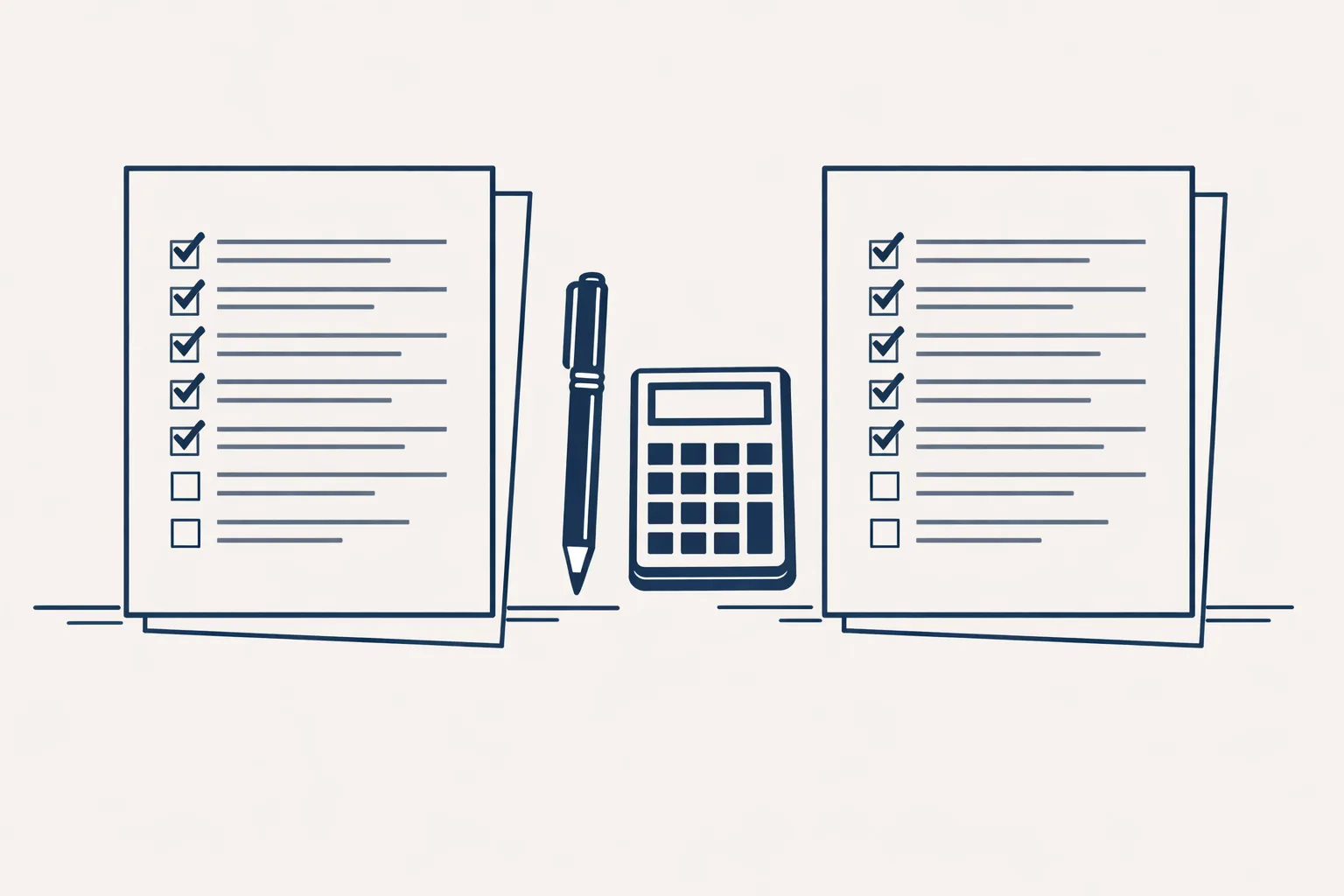
Tick each line that's true today. More ticks means AI video is a safer fit for you.
When should you use AI, and when real footage?
Use AI for moods, simple pictures and explainers, and use real footage for people, proof and products.
Here is a simple split to start from.
| Job | AI generated video | Real footage |
|---|---|---|
| A tip or reminder with a voice over | Works well | Fine too |
| A seasonal greeting | Works well | Fine too |
| Explaining an idea with simple pictures | Works well | Optional |
| Showing your team | Not advised | Best |
| Showing a finished job or result | Not advised | Required |
| Showing a product people will buy | Risky | Best |
| A customer story | Never invent one | Only with real permission |
How do you keep trust?
Keep trust by being honest, checking everything and keeping the real parts real.
A small bakery can use AI pictures behind a tip on keeping bread fresh, and still show its own photos of the real loaves. Viewers see the difference, and they see that you're straight with them.
It also helps to keep a steady look. When every video carries your colors, your logo and the same closing card, viewers learn who's speaking before they judge how it was made. That recognition is worth more than any trick.
- Decide what must be real: people, results, products, customer words.
- Use AI for the rest: moods, simple pictures, explainers.
- Keep your own logo, colors and end card on every video.
- Check every fact and every word on screen before posting.
- Mark AI content if the platform asks, and say so if someone asks you.
- Watch comments. If viewers say a clip feels fake, take note.
Where do we fit in?
We build short vertical videos from a content calendar: a voice, pictures in a house style, captions and an end card. We make them for our own brand today, and for your business we build it to order.
We keep the facts in your hands. The video explains and sets the mood, and the real details come from you. Every step starts with your approval, then you choose when it goes automatic.
We don't run paid ads or make phone or voice agents. The checklist below helps you judge whether AI video suits your customers.
Questions
Can people tell AI generated video from real video?
Often yes, especially with faces, hands and speech. Moods and simple pictures are much harder to spot.
Is it wrong to use AI generated video in marketing?
No, if you're honest. Don't invent people, results or customer stories, and follow each platform's rules.
Will AI video hurt my brand?
It can if it feels fake or misleading. It helps when it's clear, helpful and backed by real facts.
Do I have to say a video is AI generated?
Some platforms ask you to mark it, so check their rules. Being open is the safe habit.
What should I never make with AI?
Fake testimonials, fake before-and-after results, real people's faces saying things they never said, and products that don't exist.
Tell us your workflow. We will build it around you.
Write to hello@thenewaiemployee.com with the kind of video you're considering, and we'll tell you plainly whether AI suits it.
Talk to us Related service: Social media and video