A knowledge transfer process for someone who's leaving captures what the role really did, what's still open, the coming deadlines and who takes over each part, before the last day. Their mailbox and files, read with the employer's permission, are the fullest record of all four.
Why do handovers fail?
Handovers fail because the knowledge transfer process starts too late and relies on memory. The person leaving describes the job as they think of it, not as it really runs.
When a key employee resigns, the notice period fills up fast. There's their own work to finish, goodbyes, maybe some holiday left. The handover becomes a meeting in the last week and a document written on the last afternoon. It lists the big duties and misses the small regular ones nobody thinks of as tasks. The supplier who needs a nudge every month. The report a customer expects every quarter. The password only that person knows how to reset.
Those small things pop up weeks later, usually as a problem. A customer asks why a document never arrived. A deadline passes because it lived in one person's calendar. The colleague who took over spends days digging through old emails.
A good knowledge transfer process fixes two things. It starts as soon as the departure is known. And it works from the record of what the person actually did, not only from what they remember.
How do you capture what the role really did?
Start with a plain description of the role as it was really done: the recurring tasks, the people involved and the tools used.
Job descriptions are written once and rarely updated. After a few years, a capable person has usually taken on work that's on no paper at all. This is where process documentation and business process mapping earn their keep. Each recurring task is written as a short list of steps: who sends what, to whom, and when.
Say the person leaving is the office manager of a small family business. One recurring task is ordering the monthly cleaning supplies and paying that supplier. It takes ten minutes, so nobody listed it. But if it's missed, the cleaners stop coming.
Build your employee handover document around these tasks, not around the org chart. Answer the same questions for each one. And don't aim for perfect. One page per task, written in plain words by the person who does it, beats a polished manual that's finished after they've gone.
- What the task is, in one sentence.
- How often it happens, and what starts it.
- Who it involves: customers, suppliers, colleagues, advisers.
- Where the work arrives and where the result goes.
- Which files, folders, sheets and accounts it uses.
- What usually goes wrong, and how the person deals with it.
What about open items and deadlines?
Next, list everything still open on the last day, and every deadline in the months after it.
Open items are threads in progress: a quote waiting for an answer, a dispute with a supplier, a promise to a customer, a document asked for but not received. Deadlines are dates that arrive whether anyone remembers or not: contract renewals, filing dates, reports, licenses that expire.
Give every line an owner. An open item with no named owner after the last day will probably be forgotten. The table shows a simple format that works for both.
| Item | Type | Status or date | Who takes over |
|---|---|---|---|
| Quote sent to a customer, awaiting reply | Open item | Chase next week | A named colleague |
| Supplier dispute over a short delivery | Open item | Credit note promised, not received | A named colleague |
| Annual service contract renewal | Deadline | Notice period ends next quarter | A named colleague |
| Monthly stock report to a customer | Recurring | First working day each month | A named colleague |
| Online account only this person can open | Access | Transfer before the last day | A named manager |
Can you read the person's work trail?
Yes, with permission. The most complete record of what a role did is its work trail: the mailbox history and the attachments in it, read with the employer's permission.
A mailbox shows the real job. It shows who the person wrote to, about what, how often, and what they promised. The attachments show the documents they made and received. Read carefully, a few years of email reveal the recurring tasks, open threads and coming deadlines that a handover meeting tends to miss.
This is the evidence step. It checks the list the person wrote from memory against what really happened.
Do it properly. The employer should allow it in writing, the person leaving should be told, and private messages should be left alone. Rules on reading employees' email differ from place to place, so check with your adviser first. Reading means reading only: nothing deleted, moved, forwarded or answered.
We run this today. With the employer's permission, our robot reads the person's mailbox history and attachments, read-only, and writes up what the role did, what's still open, the deadlines and a handover plan, before the last day. It runs on our servers against the company's own accounts and changes nothing in the mailbox. The result is a draft for the manager and the person leaving to go through together, not a final word.
Handover countdown checklist
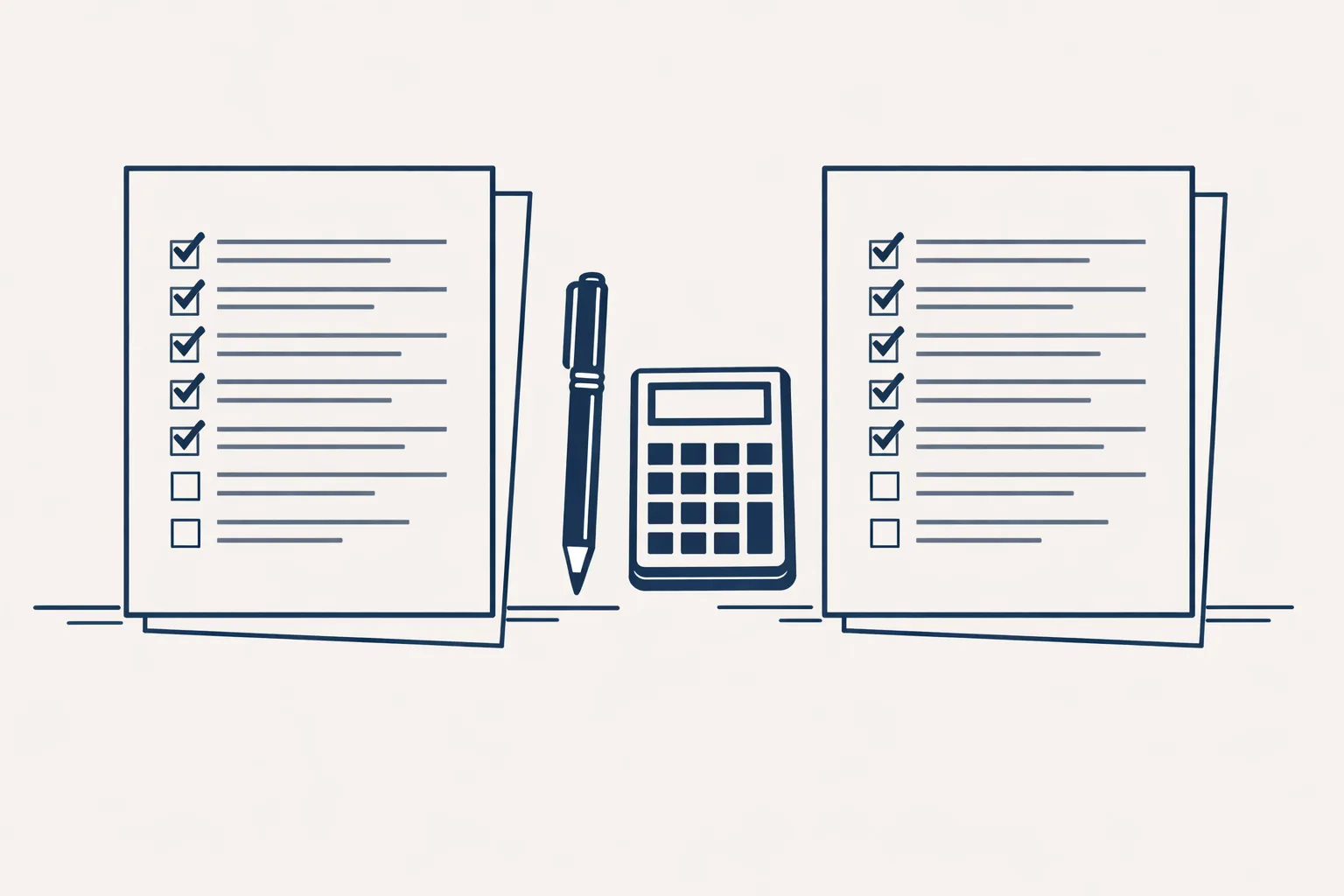
Write the role and the leaving date at the top of a printout, then tick each step already done. The steps are in the order they should happen.
What does the handover plan look like?
The plan turns your findings into dated actions: who takes over each task, when they shadow it and when they do it alone.
The best plans use the notice period to let the successor do each recurring task once, while the person leaving is still there to answer questions. A sound order looks like this.
- As soon as the departure is known, agree the leaving date and name who takes over.
- Gather the record: recurring tasks, open items and deadlines, from the person and from the work trail.
- Give every line a named successor and agree it with them.
- Walk through each recurring task together, with the successor doing it while the person leaving watches.
- Transfer access: shared mailboxes, online accounts, supplier portals, files and passwords, through your company's own process.
- Tell customers and suppliers who their new contact is, with an introduction from the person leaving.
- On the last day, go through the open items together and confirm each owner one last time.
What happens after the last day?
The process doesn't end on the last day. The first months after it are when the gaps show up, so keep the record and the plan in use.
Keep the handover document where the whole team can find it, and treat it as a living record. When something turns up that was missed, add it, with the answer. Before they leave, agree with the person whether they'll answer a few questions afterwards, and how.
The mailbox stays a source too. Instead of leaving it unread or deleting it, many businesses keep it open to a named person for a while, so replies from customers and suppliers aren't lost. How long, and who may read it, is another question for your adviser.
Use the checklist below to see how much you have in place.
How do you make knowledge transfer a habit?
The easiest knowledge transfer process is one that has partly happened before anyone resigns, because the key tasks are already written down.
Most businesses only write down a role when someone leaves it. A lighter habit works better. Once a year, or whenever a role changes, ask each key person to list their recurring tasks and the deadlines only they track. It takes an hour, and it turns a future handover from a dig into an update.
The same record helps in other moments too: a long illness, parental leave, a sudden holiday, a new hire learning the job. It's also the starting point for any automation, because a task written down step by step is a task that can be checked, shared or sometimes drafted by software.
None of this needs special tools. A shared folder with one page per role, reviewed on a fixed date each year, is enough to start.
Questions
What is a knowledge transfer process?
It's the planned way a departing person's knowledge, tasks, open items and deadlines are passed to the people who take over, so the work carries on without gaps after the last day.
What should an employee handover document include?
The recurring tasks of the role, the open items with their status, the coming deadlines, who takes over each line, and the files, accounts and contacts each task uses.
Can we read a departing employee's email?
Rules differ from place to place. The employer should allow it in writing, the person should be told, private messages should be left alone, and you should check with your adviser first.
When should the handover start?
As soon as the departure is known. A handover written in the last week tends to miss the small recurring tasks that cause problems later.
Does your robot change anything in the mailbox?
No. It reads the mailbox history and attachments, read-only, with the employer's permission, and writes a draft handover for people to check.
Tell us your workflow. We will build it around you.
If a key person is leaving, write to hello@thenewaiemployee.com with the role and the leaving date. We'll tell you plainly what a read-only handover review can cover in the time left.
Talk to us Related service: Process mapping and handover